RETAINER TRACKING FOR TEAMS MANAGING CLIENT CONTRACTS

Control every retainer, no surprises at close.

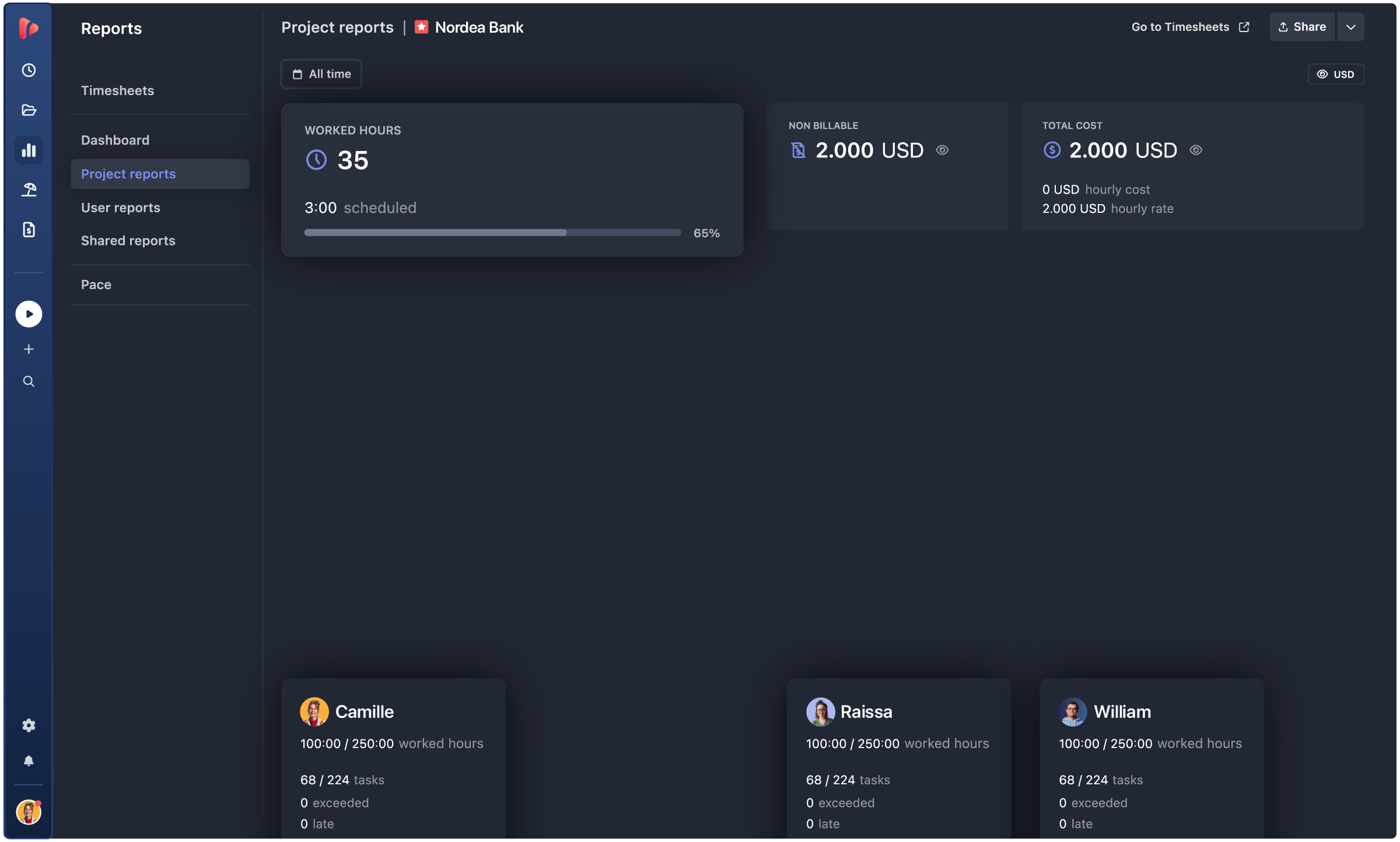
Retainer tracking software that updates block consumption automatically as the team logs hours, so overruns get caught before the period closes.

Get started

set · track · renew

Every retainer, tracked from day one to renewal.

One retainer, configured once, updates itself as the team works, no manual math needed.

1

Set it once

Define the client, project, retainer type (fixed hours, a budget, or a mix of both), and renewal period. The block stays in place until you change it.

2

Watch it update

Every hour logged updates consumption automatically: hours used against the block, the percentage consumed, and a preventive alert before the limit.

3

Choose the model that fits

Fixed-price or hourly, each retainer follows the model that fits the contract. More on how those two compare below.

Overrun, underuse, renewal: the three moments a retainer
lives or dies by.

Each one plays out differently once consumption is visible in real time. This is where a retainer earns its renewal, or loses it.

1. The overrun gets caught with enough runway to still do something about it.
2. A client who feels the full value of what they paid for renews without hesitation.
3. Renewals get negotiated with evidence, not estimates.

01 / Overrun

Ninety percent of the block is gone and half the period is still ahead. Consumption is visible before the team crosses into unpaid territory. The PM has time to talk to the client before hours run out. Scope gets adjusted on purpose, not discovered by accident.

03 / Renewal

The period closes and the renewal conversation is about to start. Real consumption data from every period is already there. Hours, projects, and tasks are all accounted for. The conversation starts from facts, not memory.

02 / Underuse

The block is at 40% with the period almost over. Unused hours show up while there’s still time to use them. The team prioritizes deliverables the client will actually notice. The block gets used, instead of quietly expiring.

client transparency

Clients see retainer consumption in real time.

One link, updated automatically, no account or status meeting required.

fixed price · hourly

Two ways to run a retainer, same visibility either way.

The model changes what you’re watching for, not whether you can see it.

Fixed-price retainer

  • The client pays one fee for the period, regardless of hours used.
  • The team watches hours against a profitability threshold, not a client-facing block.
  • Overrun risk means margin risk, not extra billing.

Hourly retainer

  • The client pays for hours consumed within an agreed block.
  • The team watches consumption against that block, not internal margin.
  • Overrun risk means unauthorized hours, unless the client agrees to more.

Fixed or hourly, every number is tracked, not assumed.

who is it for

The same retainer data, read differently depending on the role.

Different reasons to check the same retainer consumption data.

icon all in one
Agencies with multiple monthly retainers.

Several clients running at once, one dashboard instead of checking each block by hand.

time management icon
Consultancies with fixed-hour agreements.

Constant overrun risk on long projects, caught with a preventive alert before the block runs out.

team icon
Account managers.

Need to know what’s left in the block to plan the month’s work, without asking someone else first.

user report icon
Directors and PMs.

Renew from consumption history instead of estimates, with evidence ready for the negotiation.

outcome

This is what full retainer control looks like.

What changes once every retainer’s consumption is visible from day one.

No surprises, full trust

Consumption is visible before the block runs out, and the bill always matches what the client has already seen.

No underused blocks

Unused hours show up while there's still time to prioritize deliverables and use them.

Renewals backed by data

Real consumption history replaces guesswork when it's time to renew.

use cases

Real numbers from companies already using retainers.

Two examples of what changed once consumption became visible in real time.

Strategy consultancy, 40h/month retainer

The PM checks consumption mid-period. Early visibility caught overrun risk in time to loop in the client, and in the next cycle, unused hours got prioritized into deliverables the client valued. The following renewal was negotiated from consumption history, not impressions.

→ 0 surprises at renewal

Agency, 8 monthly retainers

Before TrackingTime, tracking lived in a spreadsheet nobody updated consistently, absorbing two unbilled overruns a month on average. In the first month with TrackingTime: zero overruns, and two proactive client conversations to adjust the block before close.

→ From 2 overruns a month, to zero.

Your next retainer,
under control from day one.

Get started

Free for unlimited users. No credit card required.

Sign in with Google