How TrackingTime fits into your dev stack.
Connect once. Let the team log hours from inside their dev tools while HR and finance get the data they need in real time.
Time Tracking for Software Teams
Your dev team keeps working in Jira, Azure DevOps, or whatever tools they use. TrackingTime captures the hours and feeds accurate data to HR, finance, and project reporting without changing how the team works.

THE PROBLEM
Jira knows what shipped. It doesn’t know how long it took, what it cost, or what goes into payroll. That gap is what HR, finance, and project leads spend time reconstructing every month.
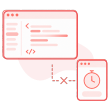
Devs won't adopt a separate time tracking tool. If it's not in their existing workflow, it doesn't get used. The hours go unrecorded and HR and finance are left guessing.
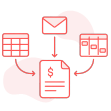
HR crosses spreadsheets, email threads, and project tools to assemble payroll every cycle. The data is never fully reliable and the process takes longer than it should.
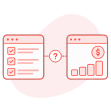
PMs and finance know what shipped but not what it cost in hours. Without that data, project estimates stay disconnected from reality and margins stay invisible.
What Software Teams Need to Track
Dev teams don’t have a time tracking problem. They have a time data problem. The hours exist, but they never become structured data HR can run payroll on or finance can use to cost a project.

Dev teams track work in Jira, Azure DevOps, Linear, and similar tools. TrackingTime integrates with those tools so hours are logged in context, without asking the team to open a separate app or break their workflow.

For teams that won’t fill in timesheets manually, AutoTrack detects active work and suggests time entries automatically. The browser extension tracks time directly inside the tools the team already uses.

Hours are attributed to the right project, sprint phase, or client engagement at the moment of capture. That attribution is what turns a log of hours into cost visibility for PMs and billable data for finance.

Senior engineers and junior developers work on the same project at different costs. Rate assignment by user, project, or task applies automatically and locks historical rates when costs change.

HR gets structured timesheets by person and period, with approval workflows that validate hours before payroll closes. No manual cross-referencing across tools.

Time off, holidays, and work schedules are tracked alongside project hours. HR manages PTO policies and time cards in the same system, with no separate tool required.
Time Data

The team tracks time from inside Jira, Azure DevOps, or the browser extension. No separate app, no manual timesheets, no process change. Hours are captured where the work already happens.

Every tracked hour is attributed to the right project, sprint, or client. PMs and finance see real-time cost per engagement without waiting for end-of-month reconciliation.

Timesheets are structured by person and period, validated through an approval workflow, and ready for payroll without manual cross-referencing. HR closes each cycle from a single source.

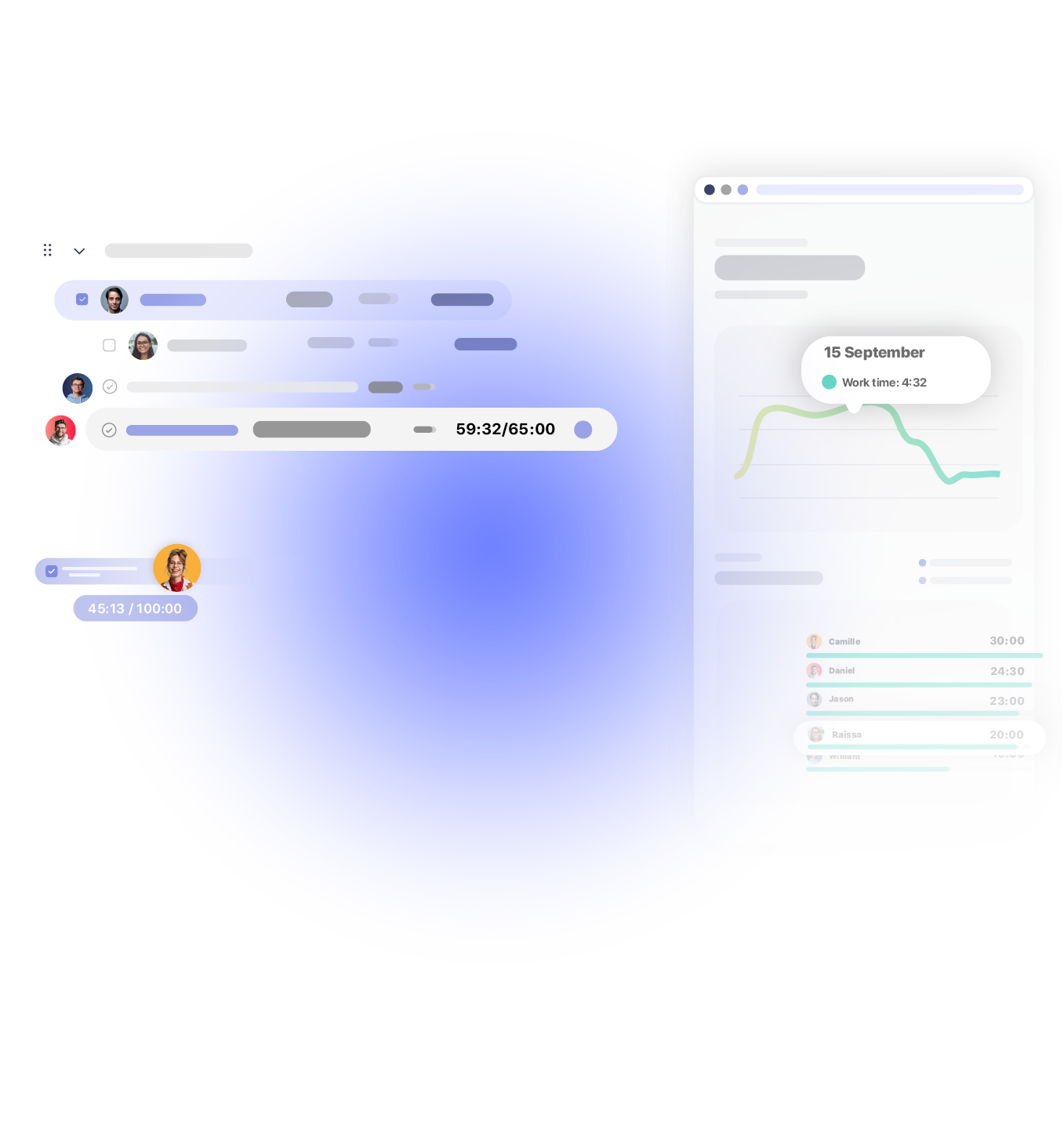
Connect once. Let the team log hours from inside their dev tools while HR and finance get the data they need in real time.

Link TrackingTime to Jira, Azure DevOps, Linear, or any tool in your stack. Tasks and projects sync automatically. Every hour the team tracks is attributed to the right project and sprint without manual setup on each entry.
Give each person the entry method that fits how they work: browser extension, mobile app, web app, or AutoTrack suggestions. Hours are logged close to when the work happens, with required fields enforced at capture.

Define billing rates by user, project, or task type. Set required fields for every time entry. Configure approval workflows so HR and finance validate hours before payroll or invoicing opens.

Timesheets are organized by person, project, and period. Approved hours are locked and exportable as a clean dataset. HR closes payroll from one source. Finance sees project costs in real time.
Built for software teams that need accurate time data across projects, sprints, and payroll cycles without changing how the dev team works.
BEFORE AND AFTER
See how software teams move from scattered time logs and manual payroll cross-referencing to a single source of accurate data for HR, finance, and project leads.
who is it for
The fastest-growing agencies and consultancies know their unit economics cold. Time tracking is how they validate that growth is actually profitable — not just busy.
Social proof

High rates from our users confirm that we’re built for teams.







OPENSTAX

MOMA

PLAYPASS

SSL

SMARTSHEET

MCI
FAQS
How TrackingTime fits the dev workflow, payroll, and project costs: the questions HR, finance, and project leads ask most.
TrackingTime integrates with Jira, GitHub, GitLab, Bitbucket, Azure DevOps, and Linear. The browser extension lets the team track time directly inside any of these tools without switching to a separate app. Tasks and issues sync automatically, and every tracked hour is attributed to the right project and sprint in TrackingTime.
Yes. TrackingTime runs as an app inside Microsoft Teams, so the team can log and review time without leaving Teams. For organizations that also use Azure DevOps or Microsoft Planner, TrackingTime connects with both, keeping the full workflow inside the Microsoft ecosystem.
TrackingTime is designed to work inside the tools the team already uses. The browser extension tracks time across Jira, GitHub, Azure DevOps, and 100+ other tools. AutoTrack detects active work and suggests time entries automatically, so manual input is minimal.
Yes. TrackingTime’s policy engine lets you define which fields are required before an entry can be saved: project, task, description, or work type. This ensures every entry has the context HR and finance need without relying on the team to fill it in later.
Yes. TrackingTime’s approval workflow lets HR or managers review and approve timesheets by person and period before payroll closes. Approved entries are locked, timestamped, and exportable as a clean dataset with no manual reconciliation.
Yes. Time off, holidays, and work schedules are tracked in TrackingTime alongside project hours. HR manages PTO policies, accruals, and time cards in the same system, with no separate tool required.
Set cost rates for each developer or role. TrackingTime totals the hours logged against each project or sprint and calculates cost automatically. Filter reports by date range or task to get cost per sprint, per project phase, or per client — without building a separate spreadsheet.
Yes. For time-and-materials projects, cost is calculated from hours multiplied by the applicable rate. For fixed-price projects, set a project budget and compare it against actual hours and cost as work progresses — so finance knows whether the project is on track before it closes.
Cost rates can be set at the user level, the project level, or the task level. Set different rates for junior, mid, and senior developers and TrackingTime applies the correct rate automatically when each person logs time — no manual calculation needed in reports.
Historical rates are preserved. If a developer’s rate changes, reports for periods before the change still reflect the original rate. Reports going forward use the new rate. Sprint and project cost data stays accurate even after a rate update.
No. TrackingTime connects to your existing dev tools via integrations and adds the time, cost, and payroll layer on top. The dev team keeps working in Jira, Azure DevOps, or whatever PM tool they use. TrackingTime captures the hours and feeds the data to HR and finance.
No. TrackingTime does not capture screenshots, keystrokes, or screen activity. People record their own time, and managers see what was logged and approved. This matters for software teams where autonomy and trust are part of the working culture.
Time tracking for Software teams
No tool switching. No manual consolidation.
No sprint costs in the dark.